How Payroll Works Behind the Scenes
The employer's invisible half
For every payslip there is a second, larger calculation you never see: employer social contributions, payroll taxes and pension matches that can add a fifth or more on top of your gross pay. Your total cost to the employer is gross plus that invisible half, which is worth remembering in raise negotiations: a 5 percent raise costs the company more than 5 percent of your salary. Payroll also withholds your tax and contributions and sends them to the authorities, which is why employers care about correct tax codes and start dates.
Why payday is fixed and late looking
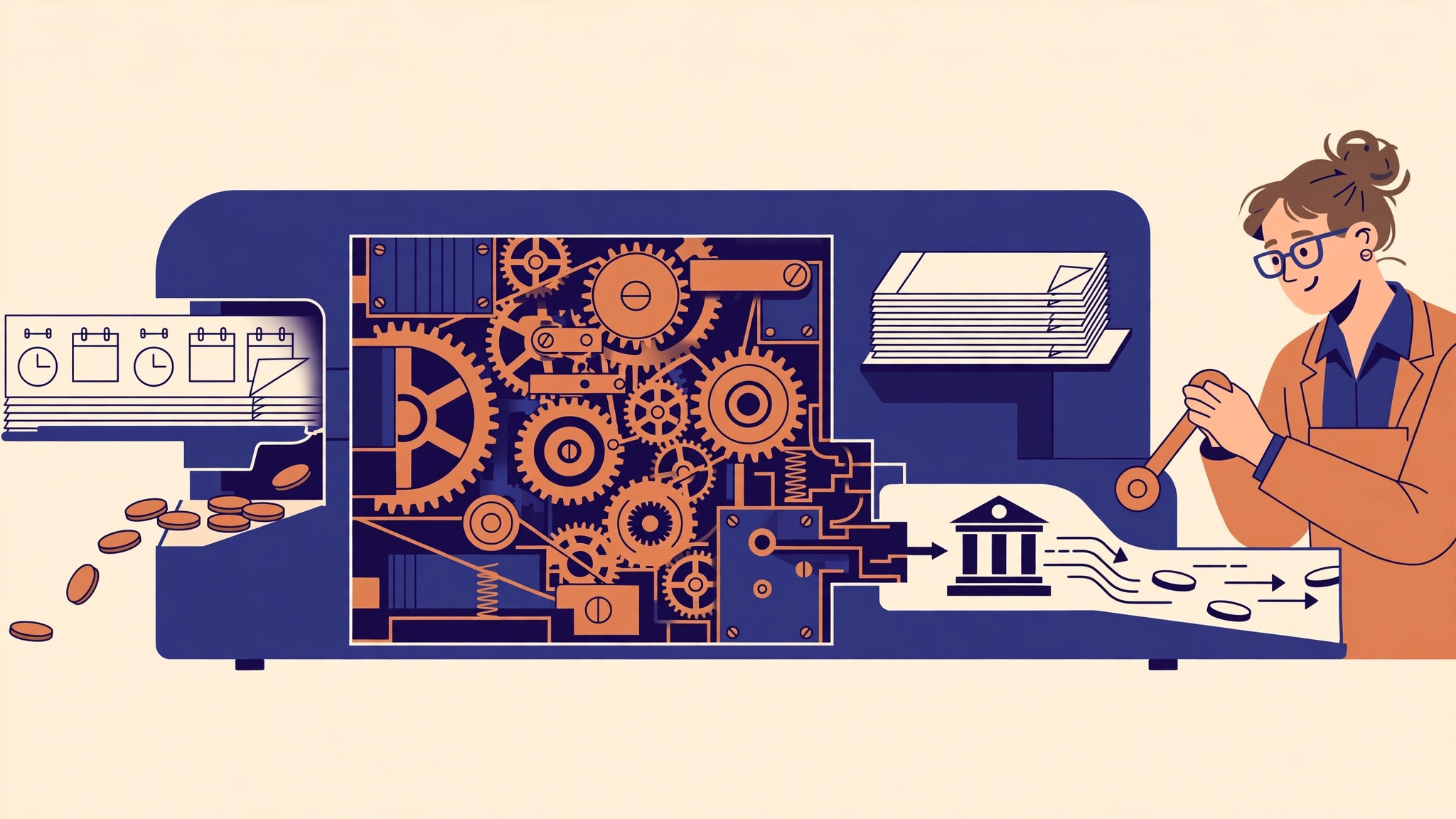
Payroll runs on a cycle: hours and changes are collected, checked, calculated, approved, then paid through the banking system, with a cut-off days before payday. Work done after the cut-off lands in the next cycle, which is why overtime worked near month end often appears a month late and why a starter who begins just after cut-off can wait nearly two months for a full first pay. None of this is your employer holding your money for fun; it is a filing machine with deadlines set by banks and tax authorities.
Where mistakes come from
Most payslip errors trace back to inputs, not calculations: wrong hours submitted, an old tax code, a missed starter form, a deduction started or stopped late. That is good news, because inputs can be corrected and back-paid. Check the first slip of any job and the first slip after any change, compare the gross against your own record of hours, and raise differences in writing with dates. Payroll departments fix documented errors quickly; vague complaints in corridors fix nothing.