Weekly, Fortnightly or Monthly Pay: What Changes and What Does Not
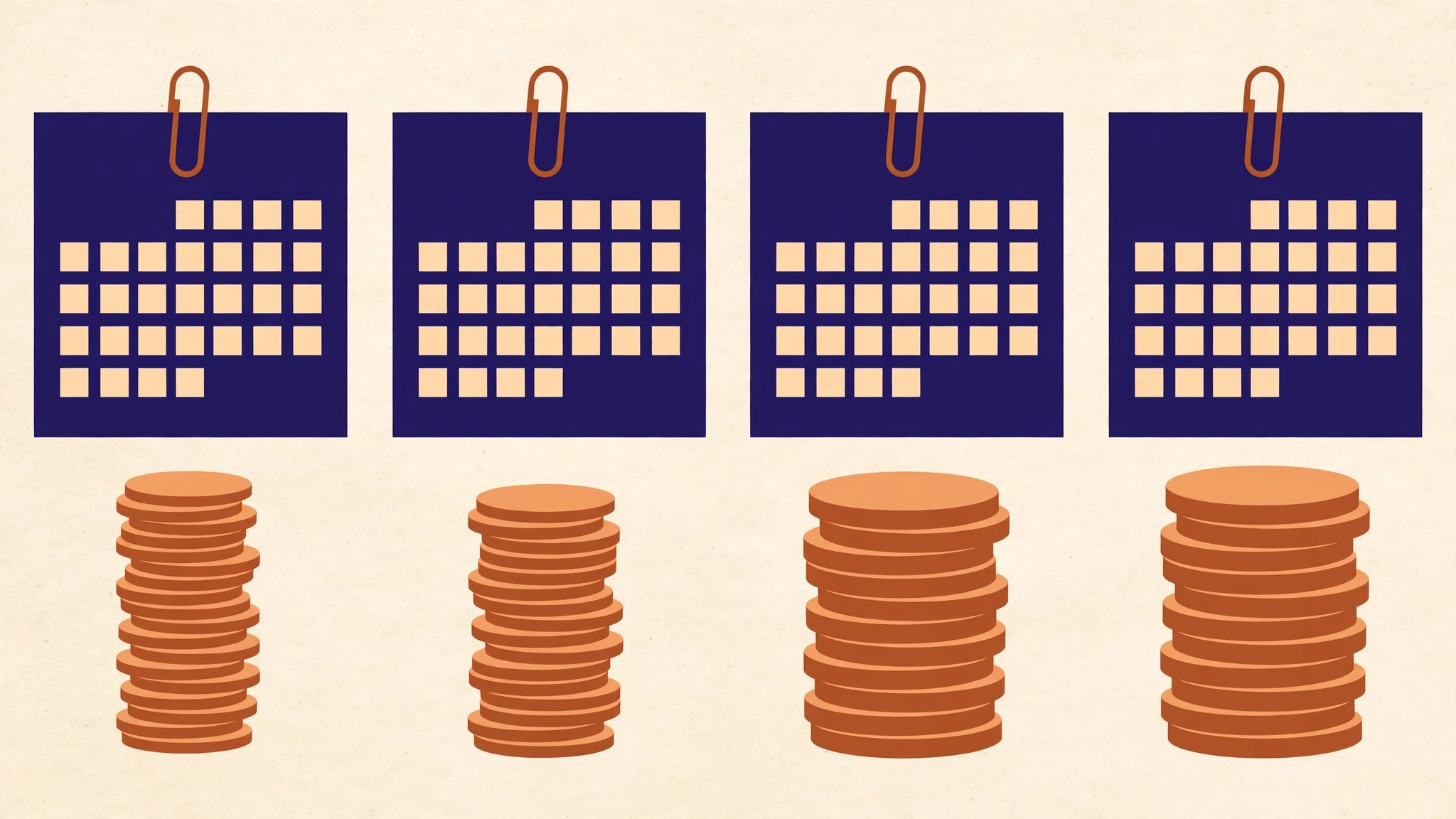
The same salary, four rhythms
Pay frequency changes nothing about the annual amount and everything about how it feels. Monthly pay arrives in twelve large instalments that match rent and bills. Weekly pay smooths income but makes each payment small. Fortnightly pay gives 26 payments a year, which quietly includes two months with three paydays. Four-weekly pay gives 13 payments and a payday that wanders through the calendar, landing awkwardly against monthly bills. Converting any of them to the annual figure, then back to a true monthly average, is the only safe way to compare budgets across rhythms.
The traps each rhythm sets
Weekly paid workers meet the five-week month: a month with five paydays feels rich and the following short month feels poor, though the year is unchanged. Monthly paid workers meet the long month after a job change, when the first full payslip can be six weeks away. Fortnightly paid workers budgeting monthly often forget the two three-payday months and treat them as windfalls rather than as the missing piece of the monthly average. The fix in every case is the same: budget from the annual figure divided by twelve, and let the rhythm be a cash-flow detail, not the plan.
Checking a payslip against the rhythm
Your annual salary divided by the number of periods should equal the gross on each standard payslip: divide by 12, 13, 26 or 52 according to the rhythm. If a salaried payslip differs every month with no overtime or changes to explain it, something is being calculated per day or per hour that should not be, and it is worth a question. Hourly workers should see hours times rate for the exact period the slip covers; a slip whose period dates do not match the work dates is the first sign of the cut-off lag described in our payroll guide.