Piece Rate Pay Explained: Paid Per Item, Protected by a Floor
Pay follows output, not hours
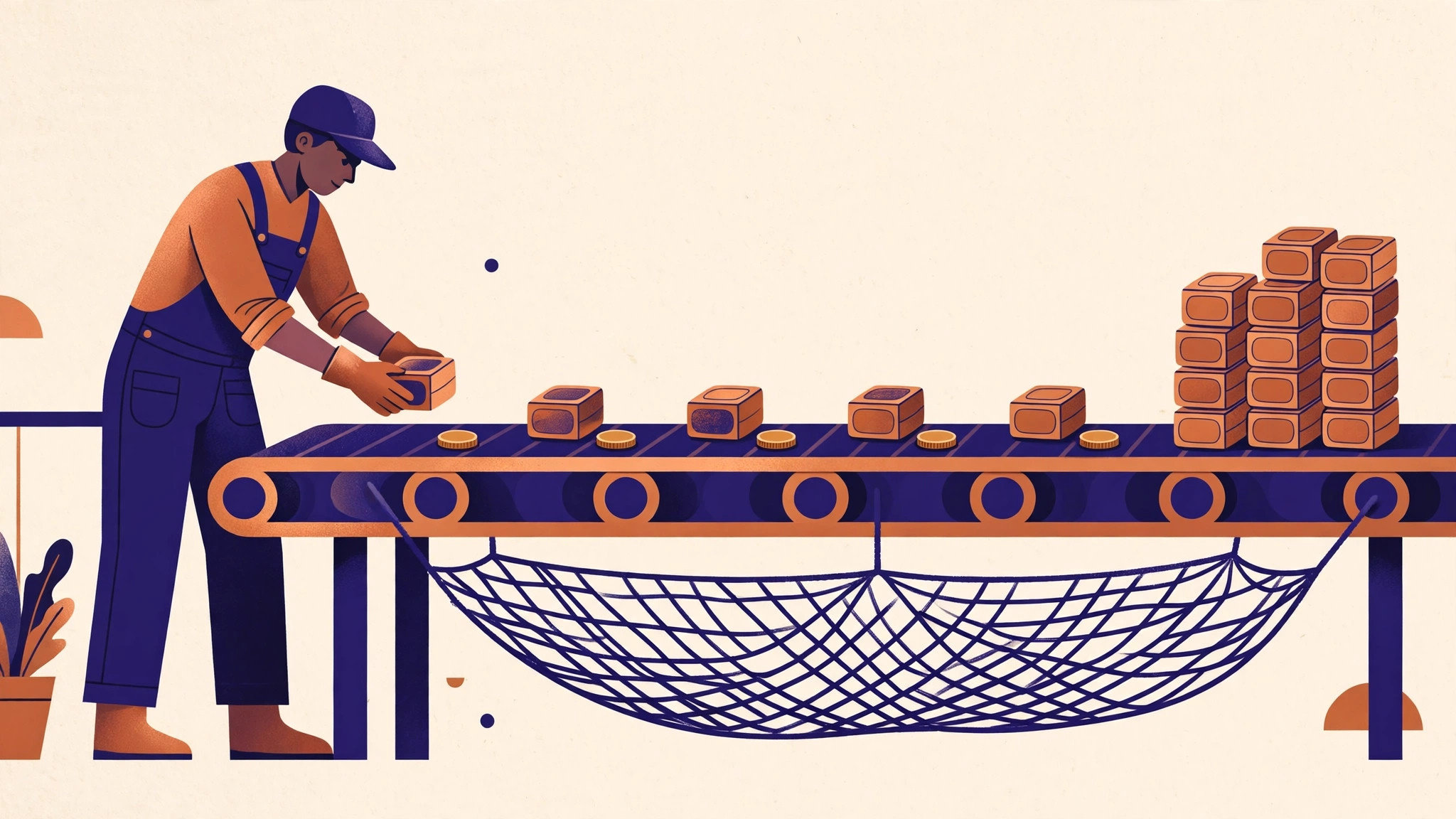
Piece work pays for each unit produced, delivered, installed or picked rather than for time. The attraction for workers is real: fast, skilled hands can out-earn an hourly rate comfortably, and slow periods are the employer's problem less often than the worker's opportunity. The risk is the mirror image: machine breakdowns, missing materials, quiet demand and quality rejections all land on the worker's pay, because unpaid units and unpaid waiting look identical on the slip.
The minimum wage safety net
Most systems keep a floor under piece work: earnings over the pay period must average at least the minimum wage for the hours worked, sometimes with a margin added to the rate calculation to allow for average pace. That means your hours still matter even when pay ignores them. Record them. If a period's piece earnings divided by hours fall below the floor, the employer generally owes a top up, and your hours record is the evidence that triggers it.
Judging a piece rate before you accept
Ask for the rate card in writing and for what a typical worker actually produces in a day, not the best worker on the best day. Ask what happens during breakdowns and waiting, how rejected work is counted, and whether rates change with volume or season. Then convert: realistic daily output times the rate, times days, gives a monthly figure to set beside an hourly offer with the converter. Piece rates reward the experienced and punish the learning curve, so a rate that is fair in month six can be brutal in week one; ask whether training weeks carry a guarantee.
Try it on your own pay
The free calculator that goes with this guide:
Turn piece earnings into an hourly rate